
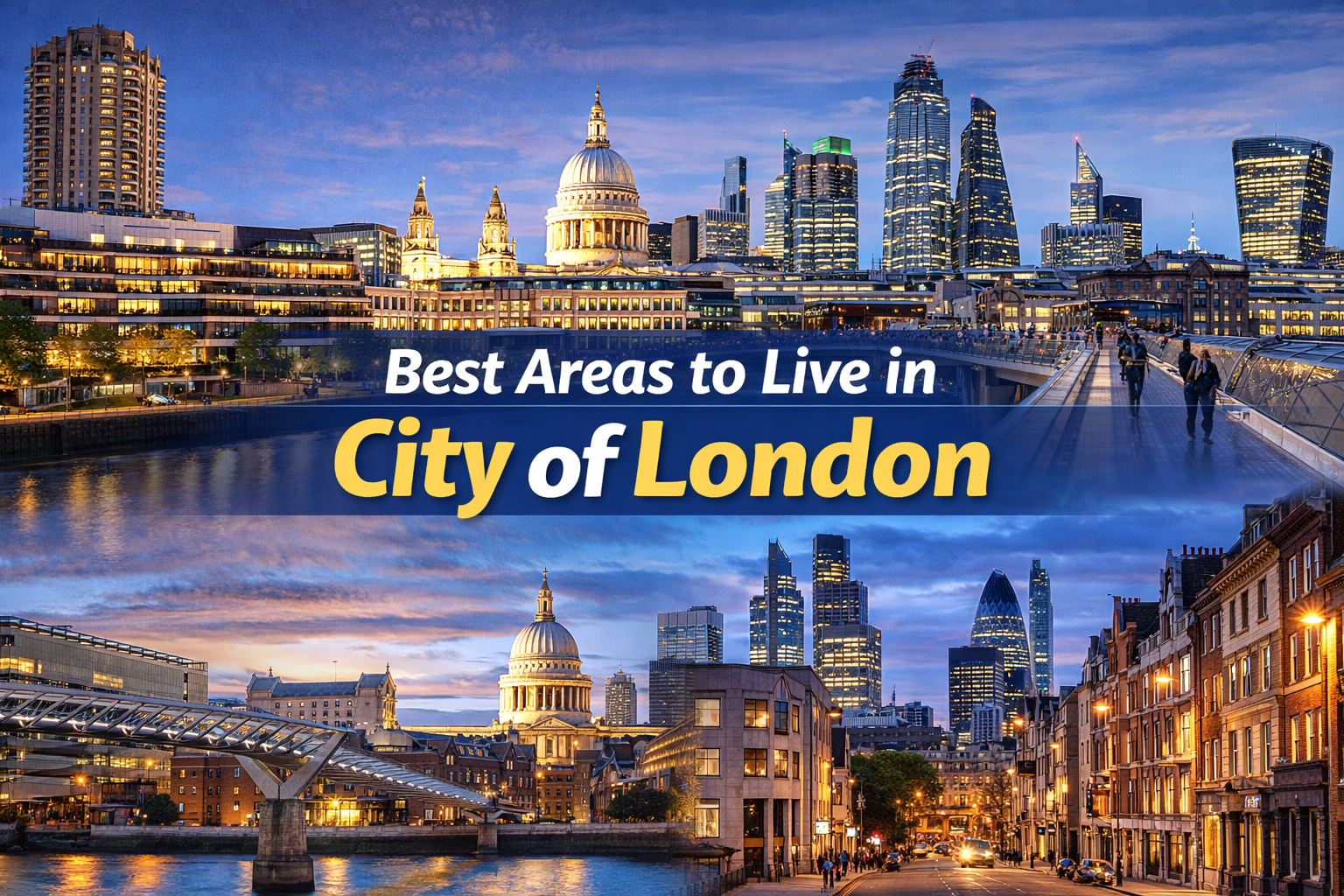
Living in the City of London is unlike living anywhere else in the capital. Known globally as a financial powerhouse, the City is also a place of hidden residential pockets, historic streets, riverside walks, and some of the most architecturally distinctive homes in the UK.
Although often thought of purely as a business district, the City is home to a small but growing residential population who value walkability, prestige, history, and central London convenience. This long-form guide explores the best areas to live in the City of London, who each area is best suited for, and whether living here makes sense for your lifestyle.
Understanding Residential Life In The City Of London
The City of London is geographically small, covering just over one square mile, yet it contains centuries of history layered with modern skyscrapers. Unlike London boroughs with large residential zones, housing here is limited, exclusive, and highly distinctive.
A Unique Living Environment
Living in the City means:
- Walking past Roman ruins on the way to the supermarket
- Sharing streets with global financial institutions by day
- Enjoying quiet, almost village-like calm at night and weekends
While daytime footfall is enormous, evenings and weekends are surprisingly peaceful.
Who Typically Lives Here
Residents of the City tend to include:
- Finance and legal professionals
- Senior executives
- International buyers
- Academics and creatives
- Downsizers seeking convenience
This is not mass-market London living. It is niche, premium, and highly central.
The Barbican Estate
Best for: Professionals, culture lovers, long-term residents
The Barbican Estate is the most famous residential area in the City and one of the most architecturally significant housing developments in Europe.
Architectural Identity
Built between the 1960s and 1980s, the Barbican is:
- Brutalist in design
- Grade II listed
- Instantly recognisable worldwide
Its concrete towers, elevated walkways, and landscaped lakes give it a self-contained, almost futuristic feel.
Living Experience
Residents benefit from:
- Spacious flats with large windows
- Sound insulation uncommon in central London
- On-site concierge services
- Private gardens and water features
Despite its central location, the Barbican feels insulated from the surrounding city.
Culture And Amenities
The Barbican Centre houses:
- Concert halls
- Cinemas
- Art galleries
- Theatres
- Restaurants and cafés
This makes it ideal for those who want culture on their doorstep.
Transport Links
Nearby stations include:
- Barbican
- Moorgate
- St Paul’s
The Barbican suits residents who want architectural prestige and cultural depth.
Golden Lane Estate
Best for: Designers, creatives, urban minimalists
Adjacent to the Barbican, Golden Lane Estate offers a very different but equally compelling residential experience.
Design And History
Golden Lane Estate was designed in the 1950s and is:
- Grade II listed
- More intimate and human-scale than the Barbican
- Known for its colourful balconies and communal spaces
Lifestyle Appeal
Residents enjoy:
- Compact but well-designed flats
- Strong community atmosphere
- Quiet courtyards and roof terraces
Golden Lane appeals to people who value design, simplicity, and community living.
Transport And Location
Golden Lane is well connected via:
- Barbican
- Moorgate
- Old Street (short walk)
It suits residents who want City living without skyscraper surroundings.
St Paul’s And Cathedral Precinct
Best for: Prestige seekers, history lovers, downsizers
Living near St Paul’s Cathedral offers one of the most iconic residential backdrops in the world.
Character Of The Area
This area features:
- Converted period buildings
- Boutique apartment blocks
- Quiet streets protected by planning restrictions
The presence of the cathedral ensures low-rise surroundings and preserved sightlines.
Lifestyle Benefits
Living here means:
- Morning walks around the cathedral grounds
- Easy access to riverside paths
- Quiet evenings once offices close
It is ideal for those who value calm, heritage, and visual beauty.
Transport Links
Stations include:
- St Paul’s
- Mansion House
- Blackfriars
This area suits residents who want prestige and tranquillity in the heart of London.
Fleet Street And Temple Fringe
Best for: Legal professionals, academics, traditionalists
The western edge of the City near Fleet Street and the Temple is one of its most historic residential zones.
Historical Significance
This area is closely linked to:
- Legal institutions
- Publishing history
- Medieval London street patterns
Many properties are conversions within historic buildings.
Living Environment
Residents enjoy:
- Character-filled flats
- Proximity to the Inns of Court
- Riverside access via the Embankment
It offers a more traditional, almost scholarly atmosphere.
Transport
Nearby stations include:
- Temple
- Blackfriars
- Chancery Lane
This area suits those who appreciate heritage and intellectual atmosphere.
Liverpool Street And Moorgate Residential Pockets
Best for: City workers, investors, modern living
While Liverpool Street is known for transport and offices, hidden residential pockets exist nearby.
Housing Options
This area includes:
- New-build apartment developments
- Warehouse conversions
- Serviced apartments
Homes here are typically modern, secure, and well-equipped.
Lifestyle
Residents benefit from:
- Exceptional transport connections
- Access to Shoreditch nightlife
- Short commutes across London
This area is ideal for people who want maximum connectivity.
Considerations
- Busy during weekdays
- Premium pricing for new developments
It suits professionals who value efficiency and convenience.
Aldgate And Eastern City Edge
Best for: Renters, young professionals, international residents
The eastern edge of the City blends into Aldgate and Whitechapel, offering more residential supply.
Regeneration And Growth
This area has seen:
- High-rise residential developments
- Improved public spaces
- Increased demand from renters
Living Experience
Residents enjoy:
- Modern apartments
- Proximity to the City and East London
- Access to vibrant food and cultural scenes
It suits younger residents seeking urban energy with City access.
Safety And Quality Of Life
Despite its global profile, the City of London is one of the safest areas in the capital.
Why Safety Is Strong
- Dedicated City of London Police
- High CCTV coverage
- Controlled night-time economy
- Well-lit streets
Crime levels affecting residents are relatively low compared to many central areas.
Transport And Connectivity
The City offers some of the best transport links in Europe.
Underground And Rail
Stations include:
- Bank
- Moorgate
- Liverpool Street
- Barbican
- St Paul’s
- Mansion House
Walking And Cycling
- Extremely walkable
- Dedicated cycle lanes
- River crossings via bridges and footpaths
Many residents rarely need a car.
Schools And Education
While the City itself has limited schools, residents have access to:
- Independent schools nearby
- City of London School
- Universities within walking distance
This makes it suitable for professionals and older families rather than young children.
Green Spaces And Recreation
Despite its density, the City offers:
- Postman’s Park
- Barbican gardens
- Riverside walks along the Thames
- Nearby access to larger parks in neighbouring boroughs
Quality of life is enhanced by thoughtfully designed green pockets.
Property Prices And Affordability
Living in the City comes at a premium.
Typical Costs
- One-bedroom flats often command high prices
- Service charges can be significant
- Limited supply keeps demand strong
However, residents gain:
- Unmatched location
- Time savings
- Prestige and security
This is lifestyle-led living rather than value-driven housing.
Who The City Of London Is Best For
The City suits:
- Senior professionals
- International buyers
- Culture lovers
- Downsizers
- People prioritising walkability and centrality
It may not suit:
- Large families
- Budget-conscious renters
- Those seeking suburban living
Comparing City Living To Other Central Areas
Compared to Westminster, Camden, or Southwark, the City offers:
- Less nightlife
- More daytime activity
- Stronger sense of order and safety
- Unique architectural identity
It is quieter at night than many expect.
Future Of Living In The City
Residential demand is increasing as:
- Office-to-residential conversions grow
- Remote and hybrid work reduces daily footfall
- More people seek ultra-central living
The City is slowly evolving into a true mixed-use neighbourhood.
Final Thoughts
The best areas to live in the City of London depend entirely on your priorities.
- Barbican Estate offers culture and architectural significance
- Golden Lane Estate suits design-focused minimalists
- St Paul’s precinct provides prestige and tranquillity
- Fleet Street and Temple appeal to traditionalists
- Liverpool Street pockets suit modern professionals
- Aldgate edge attracts younger renters and international residents
Living in the City of London is not for everyone, but for the right person, it offers a unique blend of history, security, walkability, and global prestige that few places on earth can match.
Disclaimer
This article is for general informational purposes only. Information about areas, property, safety, transport, and amenities may change over time and can vary by location.
Nothing in this post should be taken as professional, legal, financial, or property advice. Readers should carry out their own research before making any decisions.
London 33 accepts no liability for reliance on the information provided.